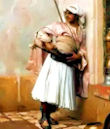
"Moreover, you scorned our people, and compared the Albanese to sheep, and according to your custom think of us with insults. Nor have you shown yourself to have any knowledge of my race. Our elders were Epirotes, where this Pirro came from, whose force could scarcely support the Romans. This Pirro, who Taranto and many other places of Italy held back with armies. I do not have to speak for the Epiroti. They are very much stronger men than your Tarantini, a species of wet men who are born only to fish. If you want to say that Albania is part of Macedonia I would concede that a lot more of our ancestors were nobles who went as far as India under Alexander the Great and defeated all those peoples with incredible difficulty. From those men come these who you called sheep. But the nature of things is not changed. Why do your men run away in the faces of sheep?"
Letter from Skanderbeg to the Prince of Taranto ▬ Skanderbeg, October 31 1460

Etimologjia e fjales.

Diskutim profesional për gjuhën.
Post Reply
User avatar
Zeus10
Grand Fighter Member
Posts: 4227
Joined: Thu Jun 04, 2009 6:46 pm
Gender: Male
Location: CANADA
Contact:

Re: Etimilogji e fjaleve...

#271

Post by Zeus10 »

Ne Beoti ne Tanagra, jane gjetur figurina, qe natyrisht jane tana-gra -itsok- :

Image

Jam kurioz te di tani mendimin e Trojan, qe i shikon me skepticizem gjetjet tona.
The only thing necessary for the triumph of evil is for good men to do nothing
User avatar
Zeus10
Grand Fighter Member
Posts: 4227
Joined: Thu Jun 04, 2009 6:46 pm
Gender: Male
Location: CANADA
Contact:

Re: Etimilogji e fjaleve...

#272

Post by Zeus10 »

Mallakastrioti wrote:Image
Pantë do te thote gjithsej(gjithmone), por une jam i sigurte qe dhe kjo fjale ka nje kutpim shqip, sidomos PAAN-ë, qe perkthehet te gjithe.
The only thing necessary for the triumph of evil is for good men to do nothing
User avatar
Trojan
Honored Member
Honored Member
Posts: 382
Joined: Fri Jul 30, 2010 9:03 pm
Gender: Male

Re: Etimilogji e fjaleve...

#273

Post by Trojan »

Zeus10 wrote:Ne Beoti ne Tanagra, jane gjetur figurina, qe natyrisht jane tana-gra -itsok- :

Image

Jam kurioz te di tani mendimin e Trojan, qe i shikon me skepticizem gjetjet tona.


Shiko une e di qe "Graia" eshte Plake... ne fakte ketu gjejme nje lidhje midis shqipes e greqishtes ngaqe i vjeter ne greqisht e "παλαιος" dhe shqipes "pljak".
Per sa i perket Tanagras nuk mund te dal ne konkluzjone nqs mund te shpjegohet me ane te shqipes ngaqe jane gjetur terracotta me femra...

Ate qe mendoj une per sa i perket Grekeve , kam mendimin qe Greket skan te bejne me Hellenet , pasi keta te dytet besoj se kane lidhje drejt perdrejt me Pellasget dhe me Iliret, kurse greket jo...

Besoj se fjala Hellen (Ellin) eshte e njejta fjale me Illyr ne djalekt te ndryshem, te dyja fjalet burojne besoj une nga fjala

Ell = Yll
kemi ne
Ellu (babylonian) = i ndritshem, ndricuar
Ilu (Akkadian) = i ndritshem, ndricuar


nga rotacjoni N-R (geg-tosk) Ellin = Ellir ose Illin=Illir
mos harrojme qe djelli ne greqisht mban fjalen Ilios

mos harrojme nga e njeta rrenje del fjala Ylli (dicka e ndritur) por edhe fjala Illuminati

Selli po ashtu nga e njejta rrenje

per tju vene te mendoni ju kujotj ne shqip fjalen SELI (parlamenti prsh)
User avatar
Zeus10
Grand Fighter Member
Posts: 4227
Joined: Thu Jun 04, 2009 6:46 pm
Gender: Male
Location: CANADA
Contact:

Re: Etimilogji e fjaleve...

#274

Post by Zeus10 »

Trojan wrote:
Zeus10 wrote:Ne Beoti ne Tanagra, jane gjetur figurina, qe natyrisht jane tana-gra -itsok- :

Image

Jam kurioz te di tani mendimin e Trojan, qe i shikon me skepticizem gjetjet tona.


Shiko une e di qe "Graia" eshte Plake... ne fakte ketu gjejme nje lidhje midis shqipes e greqishtes ngaqe i vjeter ne greqisht e "παλαιος" dhe shqipes "pljak".
Per sa i perket Tanagras nuk mund te dal ne konkluzjone nqs mund te shpjegohet me ane te shqipes ngaqe jane gjetur terracotta me femra...

Ate qe mendoj une per sa i perket Grekeve , kam mendimin qe Greket skan te bejne me Hellenet , pasi keta te dytet besoj se kane lidhje drejt perdrejt me Pellasget dhe me Iliret, kurse greket jo...

Besoj se fjala Hellen (Ellin) eshte e njejta fjale me Illyr ne djalekt te ndryshem, te dyja fjalet burojne besoj une nga fjala

Ell = Yll
kemi ne
Ellu (babylonian) = i ndritshem, ndricuar
Ilu (Akkadian) = i ndritshem, ndricuar


nga rotacjoni N-R (geg-tosk) Ellin = Ellir ose Illin=Illir
mos harrojme qe djelli ne greqisht mban fjalen Ilios

mos harrojme nga e njeta rrenje del fjala Ylli (dicka e ndritur) por edhe fjala Illuminati

Selli po ashtu nga e njejta rrenje

per tju vene te mendoni ju kujotj ne shqip fjalen SELI (parlamenti prsh)

Tani nuk po ben gje tjeter, vetem po perserit ato qe i kemi thene ne ketu dhe ndoshta dhe vete i ke mesuar ketu.

E para , nje grua e vjeter apo e re mbetet grua. Termat specifike vajze apo plake, nuk nderrojne gjinine e gruas, ato vetem perdoren per te treguar nje diapazon moshe te saj.

E dyta, megjithese edhe une mendoj se Greket jane komunitet tjeter nga helenet, kemi dy refenca te forta, te paneglizhueshme, qe pohojne te kunderten:

a. Plini Plaku, ne librin The Natural History , kapitulli i Atikes 4.11 thote:

ab isthmi angustiis hellas incipit, nostris graecia appellata.
"From the neck of the Isthmus [going north] Hellas begins, which is called by our people Graecia"

Image

b. Aristoteli ne librin Metereologica 1.14 thote:

μεν ουν απ' αυτού τους καλουμένους Γραικούς προσηγόρευσεν ΄Ελληνας

The deluge in the time of Deucalion, for instance, took place chiefly in the Greek world and in it especially about ancient Hellas, the country about Dodona and the Achelous, a river which has often changed its course. Here the
Selli dwelt and those who were formerly called Graeci and now Hellenes.

c. Ky artifakt ketu i quan ata Grekestas[shqip(??),cfare koincidence] dhe gjuhen e tyre: 'Grekisti'(greqishti(shqip???):

Image

(vazhdon)
The only thing necessary for the triumph of evil is for good men to do nothing
User avatar
Zeus10
Grand Fighter Member
Posts: 4227
Joined: Thu Jun 04, 2009 6:46 pm
Gender: Male
Location: CANADA
Contact:

Re: Etimilogji e fjaleve...

#275

Post by Zeus10 »

Pra ti nuk ben gje tjeter, vetem perserit ato qe ne i kemi thene me pare:

Image

por per ca arsye qe ti vetem i di, i quan argument kunder nesh. Ji pak me specifik te lutem, sepse argumenti qe fjalen grai, "greket" e vjeter e perdornin per te treguar nje grua te vjeter, nuk eshte shume i forte, se jo vetem nuk ndryshon thelbin e objektit, por sic shihet dhe sinonimi i saj, ashtu si per cudi e ke thene dhe vete korenspondon me fjalen tjeter te shqipes plak-a.
The only thing necessary for the triumph of evil is for good men to do nothing
User avatar
Arban Blandi
Supreme Member
Supreme Member
Posts: 464
Joined: Sun Apr 25, 2010 12:11 am
Gender: Male
Location: Іllyria, Ukraine
Contact:

Re: Etimilogji e fjaleve...

#276

Post by Arban Blandi »

[quote2="Etimological Scribbles"]Etimologji: germanishtet beige, abgerissen, burg, beiren
ger. beige 'ngjyrë kafe' - shq. bajgë
ger. abgerissen 'shqyej' - shq. i,e grisen
ger. burg 'keshtjellë' - shq. burg
ger. beiren 'godas, me shkop, këmbanat' - shq. 'bjeri'[/quote2]
Our Scribd Channel - History was a damn dim candle over a damn dark abyss.
User avatar
Zeus10
Grand Fighter Member
Posts: 4227
Joined: Thu Jun 04, 2009 6:46 pm
Gender: Male
Location: CANADA
Contact:

Re: Etimilogji e fjaleve...

#277

Post by Zeus10 »

Shih dhe se ç’kuptime marrin angl. hungry, angry, shq. ngrënë / hangër,
I urrituri(pangreni) thone eshte i deshperuar dhe i eger(egri).

Image
The only thing necessary for the triumph of evil is for good men to do nothing
User avatar
Arban Blandi
Supreme Member
Supreme Member
Posts: 464
Joined: Sun Apr 25, 2010 12:11 am
Gender: Male
Location: Іllyria, Ukraine
Contact:

Re: Etimilogji e fjaleve...

#278

Post by Arban Blandi »

Zeus10 wrote:
Shih dhe se ç’kuptime marrin angl. hungry, angry, shq. ngrënë / hangër,
I urrituri(pangreni) thone eshte i deshperuar dhe i eger(egri).Image
[quote2="agricultura dhe ἄγρο_ικος?"]Agriculture c.1600, from L. agricultura "cultivation of the land," from agri, gen. of ager "a field" (see acre) + cultura "cultivation" (see culture). the Latin word ager (field, ground; farm) derived from the Proto-Indo-European root *agro-. Derivations in Latin: agrarius, agrestis, agricultura, agricola, agricultor, Agrobacterium, peragrare, agrilus, peregri, agrimensor. It. agrume. Derivations in other languages: English acre, French ager, Italian agro, Portuguese agro, Spanish agro, Spanish agro-.[/quote2]Çfarë shohim ne: 1.gr.ἀγρός, ἄγροικος dhe 2. it.agrume.
gr. ἀγρός "field, country", gr. ἄγροικ_ος, "wild country, not coultivated" - shq. tokë "e egër" (?).
Our Scribd Channel - History was a damn dim candle over a damn dark abyss.
User avatar
Arban Blandi
Supreme Member
Supreme Member
Posts: 464
Joined: Sun Apr 25, 2010 12:11 am
Gender: Male
Location: Іllyria, Ukraine
Contact:

Re: Etimilogji e fjaleve...

#279

Post by Arban Blandi »

[quote2="Google News Archive Search"]"In Germany people used to speak many different dialects and "didn’t understand each other" as you say, until Martin Luther translated the bible into German language in 1521. Germans started to use the language Luther used in the translations (which was actually in the dialect of the region Luther was from) more and more. It took more than 250 years until that language became … "German language". You take Germany as an example, but I think you don't get my point when I say u cannot "create" a language." Gjermanët në kohën e Luterit nuk merreshin vesh me njeri - tjetrin. Megjithëse Luteri hodhi bazat e gjermanishtes moderne, gjermanëve të shkolluar iu deshën 250 vjet ta mësonin atë gjuhë.[/quote2]
[quote2="Etimological Scribbles"]Etimologji: 35 fjalë të gjermanishtës, etj.
shq. grua = ger. frau
ger. zerren, cerren, zerreisen, cerrajzen - shq. çjerr, nxjerr, kruaj, gërryej
shq. shtrëngoj - ger. streng, angl. strong
ger. töten ‘vrasin’– shq. tuten ‘tremben’
ger. drohen ‘kërcënoj’ - shq. druhem
shq. ndezin (ndez) – ger. zünden
shq. therr – ger. tier ‘kafshë’
ger. prahlen – shq. përrallis
shq. peng - ger. pfand
shq. dënon - ger. dienen
shq. gris, grisa, grisur = ger. (reißen, riss) gerissen.
ger. reif, reifen, angl, ripe – shq. rrjep, rripem, rrip
ger. teil, fr. taille - shq. ‘thelë’
ger. heben - shq. hip, hipen
hol. uittrekken, nor. trekke ut, dan. trække ud, hol. uittrekken - geg. tërhjek, tërheq
ger. sterben < shq. shterpë
ger. anspornen ‘nxis’; ger. inspirieren - shq. shpoj, shpuar, neg. shporr
ger. kante, it. canto (anë) etj. - shq. kënd, qoshe[/quote2]
[quote2="Etimologji – shq. bërë, barrë, bir, burrë, ger. bürger, it. borghese, shq.burg"]Cila mund të jetë rradha e fjalëformimit të këtyre fjalëve?
Shqipja bërë - shq. barrë, bir, burrë - ger. bürger, it. borghese, fr. bourgeois, port. burguez - lat. burgus, it. borgo - shq. burg

Këtë etimologji ndjek edhe gjymtyra e dytë ‘burg’[1] e emrave të mjaft qyteteve në mbarë botën si Hamburg, Johannesburg, Luxembourg, Regensburg, Salzburg, Straßburg (Strasbourg), Shën Petersburg. Vetëm në Gjermani ekzistojnë rreth 50 emra vendesh, që përmbajnë këtë prapashtesë.[2] Trajta të -burg janë dhe -berg, -borough.
-------
[1]..duke kalkuar mbi rrënjën –burg, pra, qytet, të krijuar sipas modelit të kuptimformimit të fjalëve –field, -feld, apo –berg, shprehën nocionin qytet.
[2]Germanic Elements in French Toponomy by William Robert Caljouw, Canada, 1981.[/quote2]
'Lojrat etimologjike' e Gustav Meyerit*

Ne ju kemi folur për ‘lojrat etimologjike’ të Gustav Meyer, i cili nuk shihte, për shembull, se shqipja trup është e njëjtë etimologjikisht me gjermanishtet e tija trupp, truppe, por e sillte shqipen trup të prejardhur prej sllavishteve të Ballkanit.

Këta nuk mund të merreshin me gjuhësinë e vërtetë, me etimologjinë transparente, dhe të shpjegonin se:

Përse, do të thoni ju, këta evropianë janë ngatërruar e vazhdojnë të ngatërrohen kaq shumë kur vjen puna te çështje si prejardhja e gjuhës shqipe dhe e leksikut të saj?

Këtyre hileqarëve të huaj, të djeshëm dhe të sotëm, vepra e të cilëve nuk mund të quhet kurrsesi shkencë, u bashkangjiten kopukë shqiptarë, të cilët janë zhytur qorrazi në batakun e historisë dhe gjuhësisë evropiane, pa kuptuar as dje dhe as sot hiletë e kësaj dije dhe duke mos qenë në gjendje të bëjnë dallimin mes fjalëve të bukura dhe helmit antishqiptar, që përmbajnë të gjitha veprat e tyre.

*Gustav Meyer, megjithëse u shërbeu deri në fund me poshtërsinë e tij tedeskëve të poshtër, tedeskët e poshtër e çmendën të poshtrin.
Our Scribd Channel - History was a damn dim candle over a damn dark abyss.
User avatar
Arban Blandi
Supreme Member
Supreme Member
Posts: 464
Joined: Sun Apr 25, 2010 12:11 am
Gender: Male
Location: Іllyria, Ukraine
Contact:

Re: Etimilogji e fjaleve...

#280

Post by Arban Blandi »

[quote2="Δάφνη in ''Greek'' Myth"]According to Greek myth, Apollo chased the nymph Daphne (Greek: Δάφνη, meaning "laurel"), daughter either of Peneus and Creusa in Thessaly,[1] or of the river Ladon in Arcadia.[2] The pursuit of a local nymph by an Olympian god, part of the archaic adjustment of religious cult in Greece, was given an arch anecdotal turn in Ovid's Metamorphoses,[3] where the god's infatuation was caused by an arrow from Eros, who wanted to make Apollo pay for making fun of his archery skills and to demonstrate the power of love's arrow. Ovid treats the encounter, Apollo's lapse of majesty, in the mode of elegiac lovers,[4] and expands the pursuit into a series of speeches. According to the rendering Daphne prays for help either to the river god Peneus or to Gaia, and is transformed into a laurel (Laurus nobilis): "a heavy numbness seized her limbs, thin bark closed over her breast, her hair turned into leaves, her arms into branches, her feet so swift a moment ago stuck fast in slow-growing roots, her face was lost in the canopy. Only her shining beauty was left."[5] "Why should she wish to escape? Because she is Artemis Daphnaia, the god's sister," observed the Freudian anthropologist Géza Róheim,[6] and Joseph Fontenrose concurs;[7] baldly stating such a one-to-one identity doubtless oversimplifies the picture: "the equation of Artemis and Daphne in the transformation myth itself clearly cannot work", observes Lightfoot.[8] The laurel became sacred to Apollo, and crowned the victors at the Pythian Games.[9] Most artistic impressions of the myth focus on the moment of transformation. A version of the attempt on Daphne's sworn virginity that has been less familiar since the Renaissance was narrated by the Hellenistic poet Parthenius, in his Erotica Pathemata, "The Sorrows of Love".[10] Parthenius' tale, based on the Hellenistic historian Phylarchus, was known to Pausanias, who recounted it in his Description of Greece (second century AD).[11] In this, which is the earliest written account, Daphne is a mortal girl fond of hunting and determined to remain a virgin; she is pursued by the lad Leucippos ("white stallion"), who assumes girl's outfits in order to join her band of huntresses. He is so successful in gaining her innocent affection, that Apollo is jealous and puts it into the girl's mind to stop to bathe in the river Ladon; there, as all strip naked, the ruse is revealed, as in the myth of Callisto, and the huntresses plunge their spears into Leucippos. At this moment Apollo's attention becomes engaged, and he begins his own pursuit; Parthenius' modern editor remarks on the rather awkward transition, linking two narratives.[12][/quote2]
Image
Our Scribd Channel - History was a damn dim candle over a damn dark abyss.
User avatar
Zeus10
Grand Fighter Member
Posts: 4227
Joined: Thu Jun 04, 2009 6:46 pm
Gender: Male
Location: CANADA
Contact:

Re: Etimilogji e fjaleve...

#281

Post by Zeus10 »

Fjala nderkombetare transparent ka kuptimin ne shqip: trans(permes) + paren(me pa, parë)= me pa permes.
Ne greqishten e vjeter dhe te re, διαφανης (diapanës) eshte po nje fjale e perbere:

Image

ku folja pa(koha e shkuar e shikoj) percjell veprimin e shikimit, si pjesore ose ndoshta ne dialektin geg.
The only thing necessary for the triumph of evil is for good men to do nothing
User avatar
Zeus10
Grand Fighter Member
Posts: 4227
Joined: Thu Jun 04, 2009 6:46 pm
Gender: Male
Location: CANADA
Contact:

Re: Etimilogji e fjaleve...

#282

Post by Zeus10 »

Kjo eshte e njejta folje me e pa, qe ka formuar kuptimin e fjales "greke", lartë. Kjo sepse te gjitha objektet ne lartesi jane te dukshme per syrin e njerezve:

Image
The only thing necessary for the triumph of evil is for good men to do nothing
User avatar
Zeus10
Grand Fighter Member
Posts: 4227
Joined: Thu Jun 04, 2009 6:46 pm
Gender: Male
Location: CANADA
Contact:

Re: Etimilogji e fjaleve...

#283

Post by Zeus10 »

Pra fjala epano e "greqishtes", nuk eshte gje tjeter vecse fjala shqip: e dukshme=epane

Image
Phi (uppercase Φ, lowercase φ ). In Ancient Greek it represented [pʰ], an aspirated voiceless bilabial plosive (from which English ultimately inherits the spelling "ph" in words derived from Greek)
qe ne shqip eshte ne rrenjen e fjales fanepsem ph=p(h)=p ose f

Image
The only thing necessary for the triumph of evil is for good men to do nothing
User avatar
Zeus10
Grand Fighter Member
Posts: 4227
Joined: Thu Jun 04, 2009 6:46 pm
Gender: Male
Location: CANADA
Contact:

Re: Etimilogji e fjaleve...

#284

Post by Zeus10 »

Zeus10 wrote:Fjala nderkombetare transparent ka kuptimin ne shqip: trans(permes) + paren(me pa, parë)= me pa permes.
Ne greqishten e vjeter dhe te re, διαφανης (diapanës) eshte po nje fjale e perbere:

Image

ku folja pa(koha e shkuar e shikoj) percjell veprimin e shikimit, si pjesore ose ndoshta ne dialektin geg.


Eshte dhe nje sinonim tjeter SAFI, qe ne shqip ka kuptim I PASTER, I KULLUAR qe e kane perdorur ""greket"" e vjeter:

Image

pra nje fjale SAFI SHQIPTARE.
The only thing necessary for the triumph of evil is for good men to do nothing
User avatar
Mallakastrioti
Galactic Member
Galactic Member
Posts: 2936
Joined: Thu Jul 23, 2009 4:23 pm
Gender: Male
Location: Italy
Contact:

Re: Etimilogji e fjaleve...

#285

Post by Mallakastrioti »

ainoeo =(e) njoh?

Image
Image
Post Reply

Return to “Linguistikë”